Showing posts with label chicken tractors. Show all posts

Wednesday, June 23, 2010

Windy Whizbang Weekend


About our Whizbang chicken’ pickin’experience! Sandhill CSA finally got around to processing our first round of broilers for the season, and the week or two we waited to do the job was well worth it. We finally made good on our intention to implement a mechanical chicken plucker into our processing regimen. Of course, we were not going to spend the $1200 to $1400 to buy a store-bought one. We have forever been seeing ads for a do-it-yourself model called the Whizbang Chicken Plucker, whose plans were drawn and the model developed by Herrick Kimball, a long-time backyard chicken farmer. Indeed, the whizbang model plucks two chickens in less than 20 seconds, and makes the whole processing event go along more smoothly, with a significant reduction in arthritic manual feather picking.

We only lost one chicken in this round of 50, and we don’t know why it didn’t make it. The other birds, considering the additional time we fed them out, weighed in mostly between 5 ½ and 6 ½ pounds, and were all very nice looking chickens. We were very pleased. The extra costs of feeding 50 six pound birds, however, was significant. At any rate, we wanted to wait until the plucker was built.
The plucker, in fact, could not be built by Jenn and I - not reasonably. While it says anyone can put it together, there is a need for familiarity with a number of skills, such as pulley and v-belt applications, electric wiring, and extreme attention to detail. Fortunately, our neighbor Jack has all the skills necessary to build chicken pikers, and a lot of other mechanical interests. So, he being retired, was happy to tackle the project just to see if the crazy thing would work. Jack spent about four or five days putting it together, with a number of trips to the store being found necessary, and a little more waiting for special ordered parts. While Jenn and I might have gotten the thing together, it would have taken quite a while longer just to catch up with the mechanical learning curve. Jack has been a Godsend to our family and farm. And, the plucker works, with perhaps only a few modifications necessary.

We would have finished all of the birds in two days, only needing the extra day because Jenn had to work at the library. However, as Jack predicted Saturday morning, weather got in our way. With four chickens waiting to be processed, and five more left to cull and pluck, I noticed the darkest clouds I have seen in a while coming on pretty quickly, and I directed Micah and Rosa to shut in the layer hens while I attended to the broody hen and her chicks. Just as I had walked about halfway across the pasture, the wind picked up more, and Jenn came out to tell me the power was out. Then came the noise, and the top of the tree-line was swirling in circles, as were piles of leaves that had flown over from the woods. I started yelling very loudly to everyone outside, “go downstairs and take cover now!”

Everyone ran into the house, and I anchored down the tractor that contained the Ms. Broody and her chicks. This took some time, because the wind kept blowing the tarp off. At the same time, I heard that noise in the air to the south of us that suggested something more than a strong wind was developing. I was going to head downstairs, when I saw the chicken tractor that held the last five broilers, a test model I had made from PVC and tarp, was actually blowing away! I ran over, put it back in place, and then went to the garage to find more anchors. I actually ended up dragging old used tires out of the garage to hold the tractor down, and sat out there with the chix tractor for a few more seconds to make sure it would work. At some point, I decided there was nothing more that I could do, and ran into the house to go downstairs. However, I found one more thing needed to be done. There were four, plucked and nearly butchered, chickens sitting out in the heat of the chicken. I had to bag them up, and put them into the freezer outside in hopes that they would all stay fresh while the power was out.

Then I was ready to go downstairs, but a torrential rain began to fall, and I had to make another trip around the house to shut all of the windows. I did so, and then finally went downstairs to tell Jenn and the kids that everything was taken care of, and I would stay upstairs to monitor the sky. When I returned upstairs, everything was clear. It seemed like it had taken most of an hour to get through everything, but it had probably taken less than 10 minutes. Everyone came upstairs, candles were brought out, and we sat together in the living room eating melted ice cream and waited for the power to come back on. It didn’t until after bedtime, at 11:30, when seemingly every light in the house snapped on. Fortunately, it was only out for four hours, and all of the chicken in the fridge and freezer stayed fresh, and all of the broilers out in the pen kept their feet on the ground. At least for one more day.

Friday, February 12, 2010

More winter work


We’ve been getting some things done this week. Jenn is off in Mexico, and Scot has taken the week off from work to be with the kids. What an opportunity to get farm work done. We have already completed the new chicken tractor frames. As mentioned below, we are using PVC pipe this season instead of wood, and we altered the design in other ways as well. All that is left to do is get the frames outside, reassemble them, and add the chicken wire and tarp roofs. Our first broilers should be ordered in April.
March 8 is the date that we will pick up the layer hens. We are getting Black Australorps this season, a brown egg layer and heritage breed. Jenn picked out the breed. As for the new hen house, we were lucky enough to save over $200 by finding the portable garage that we favor for housing chickens on Craigslist. Scot was very excited. We now need one more, and are waiting for it to show up on the same site. They normally cost $360.
We have made contact with the person we are purchasing lambs from, and will probably go with the one-year-old ewes in May, and then add a ram and a wether later in the season when it is time to breed. Along with the lamb project, Rosa and Micah are preparing to buy their own chicks when they arrive ate the farm store. Incidentally, we have decided to make our feed purchases from a local chain store, Family Farm and Home, instead of through the local cooperative. As we have mentioned below, we would rather purchase grain grown locally, but the folks at the coops around here are just plain unfriendly toward us. At FF@H, we have developed relationships with the employees, and the grain comes from Armada, Michigan, over in Macomb County. There was a third choice, Floyd the Feed man, who is very friendly and the least expensive, but he sells Purina Brand feed, which is far from being a local product.
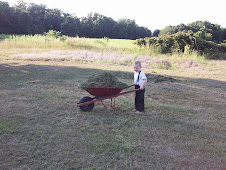
This First Day is Micah’s birthday, and he will get a cake, and probably get to pick out a present at the farm store. As you can tell by the picture above, taken last year, Micah is partial to the John Deere equipment he sees driving along our back roads all year. While we could not ever use such machinery, we did get a used John Deere riding mower, which Micah likes to drive around on with Scot during lawn mowing days. He then rakes up the grass and feeds it to the steer. By the way, this is not an endorsement of John Deere products :)

Wednesday, December 2, 2009

Sandhill's experiment with Broilers


OK, back to farming. One of the new enterprises that was undertaken at Sandhill was the addition of broilers to our ongoing farm experiment. We had raised layer hens for a few years, but we have never raised them for meat (except for culled roosters) until this past year. We decided to try two rounds of fifty broilers each. We followed the suggestions laid out by Andy Lee’s book entitle Chicken Tractor (There is more to the title, but I can’t recall it offhand) and commenced to building the pens that would hold the chickens.

The materials we purchased for the two 8’ by 10’ cages (three feet deep, two deep would have been better) cost us about $80 each, using 1” by 2” boards, chicken wire, and a rather expensive composite plastic corrugated covering. We fastened the sides and top, and the chicken wire with staples and three inch screws. We kept each panel separate in our basement where we erected them until the snow melted and we pieced each side together with zip ties and reinforced that with screws.

Next, it was time for the broiler chickens. We ordered the more marketable White Mountain crosses, which are bred to grow to five or six pounds (or more) in eight weeks. We are still not sure about ordering dual purpose heritage breeds for this year, which grow slower but are more in tune with our farming philosophy). At any rate, when you order fifty chicks of any breed, you have to brood them from one-day-old to the point where they are hearty enough to stand against the cold and other elements. Not having a brooder, and having eight barn cats in our garage, we made the decision to brood these first fifty chicks in our house because the May weather in Michigan last spring was still very cold, especially at night. First, I’d like to state that many people we have spoken with in our community have brooded chicks inside their homes. Secondly, I can tell you that each of us have reported that this is a most unpleasant experience. After brooding the chicks in a plastic swimming pool last season, this year we will build a brooder (To purchase one costs about $290 - $350)and place them in the garage with appropriate protection from the cats. You will never feel the need to clean as thoroughly as you will after having livestock in your house. (On the other hand, 10 or so layers, even 25 layers, are not as bad to brood in the house, as there is less waste to deal with).

Once they were hearty enough, we transferred the chicks out to the chicken tractors, and began to move them to fresh grass every day, and fed them broiler grower twice a day. We fed them a lot, but took seriously the instructions to keep them on feed for twelve hours, and then remove the feed for twelve hours, to reduce complications arising from over eating. We went through approximately 15 bags of feed in eight weeks costing around $13 a bag.

We faced two problems with our two sets of broilers. First, we lost nine chickens to the late July heat, not because they didn’t have enough water, but most likely because they didn’t have proper shade. One thing we know, the broilers will not walk more than three feet to drink water, so, if there is not proper shade, they will be overwhelmed by 90 degree heat. This was a tragedy around our farm, as we felt that if we would have been on the farm instead of working outside the home, we could have better protected the animals. An tarp solved this problem. The other problem was predators. We dealt with them severely, shooting two raccoons that had stolen two chickens from us, and one skunk that had killed two chicks. Predators always return to the scene of the crime, because they know it will be easy pickings. Raccoons, however, tend to come within four hours of darkness, and I only had to wait for a few hours before shooting them an hour apart with a twelve gauge. The skunk took some thought, however, as I was concerned about the release of musk. Skunks come in the morning, and I decided to use a .22 caliber rifle for the skunk. It worked, with minimal smell resulting. Many folks, especially Quakers, are concerned about the hunting of predators, as opposed to trapping them. In rural areas, once predators feel safe enough to approach human homes, they will continue to do so wherever they are released from live traps. To release a raccoon into another homes range is to give other home owners trouble. Also, when we tried a live trap in Ohio once, the raccoons were smart enough to steal the bait from the trap, then proceed to raid our barn for chickens. I am not about to live trap a skunk. As for pacifists having guns on the property, the reality of coyotes, small predators, injured game, and sick and dying animals is a reality of rural life, and hunting weapons, while not absolutely necessary, are a solution to such problems.

Back to chickens. Finally, after eight weeks of feeding broilers, it was time for butchering. There are many ways to prepare a chicken for butchering. I prefer to shoot them in the head while holding them upside down, as it is quick and painless. Killing cones will be added this year, because as the birds flap after death, the wings can break due to the force of the spasms. After they bleed out, I remove the head, then we scald them in 155-degree water that we have added dish soap to in order to ease the removal of feathers from the carcass. Picking a chicken by hand is a time consuming process, and for this year, we hope to build our own chicken picking machine ( A new chicken plucker from a manufacturer costs more than a thousand dollars). It will reduce the time to prepare a bird for butchering from 10 minutes per bird to 20 seconds for two birds. Once the bird is plucked, it is ready for dressing, which, after four or five birds, takes about three minutes or less. However, the first one might take as many as fifteen minutes. It simply takes practice. After dressing the bird, we clean out any remnants from dressing the bird in a water bath, then age the bird for a day or two in a refrigerator before freezing. Our shareholders can pick them up cold or frozen, either way. We have not received one complaint about our birds, and we love them ourselves. They taste great, even better when you raise them yourselves.